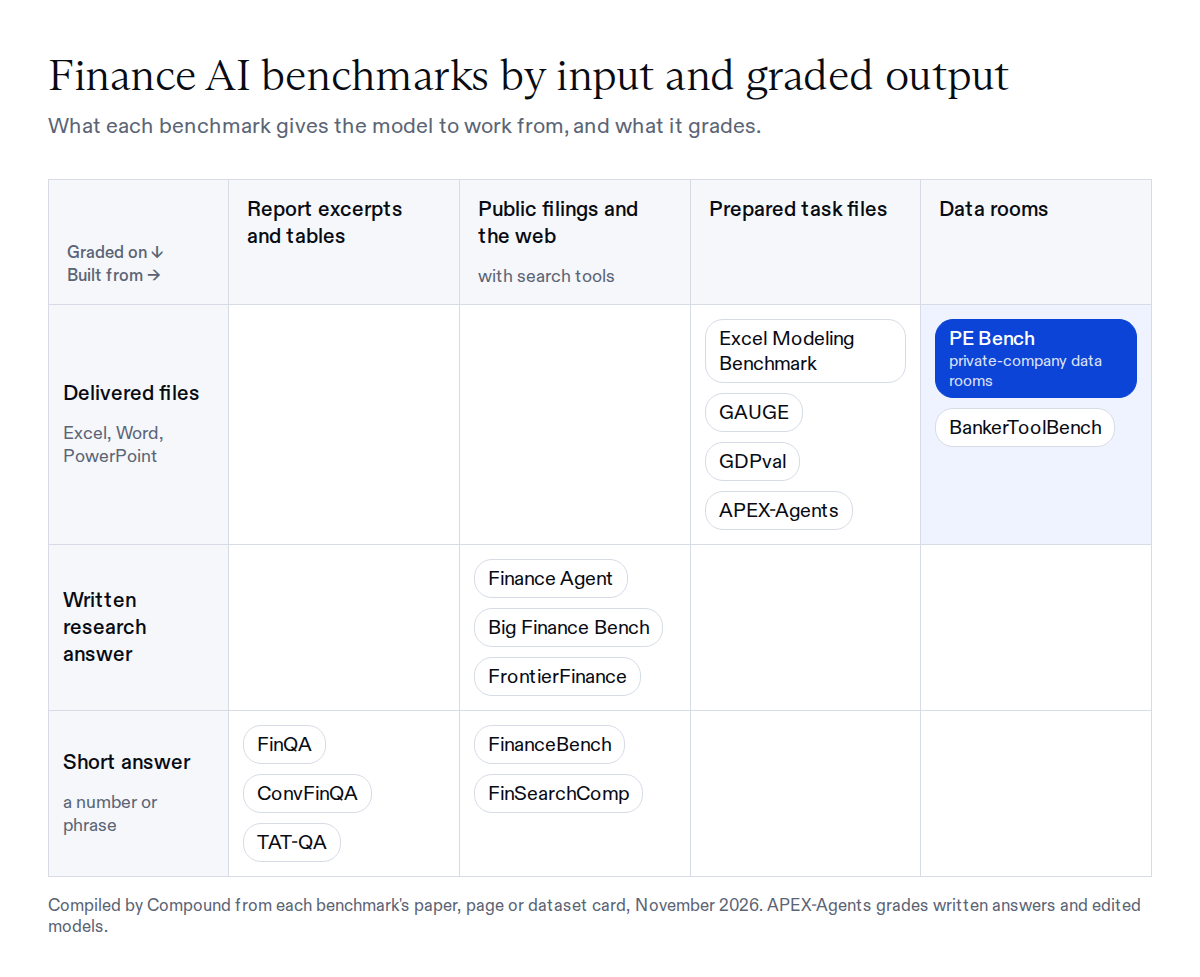
The best benchmark for buy-side work grades the files an analyst hands a partner, built from a full data room. PE Bench, our own private equity benchmark, does that: 58 tasks across 5 deals, graded on the Excel models, memos and decks each agent delivers. Most others grade written answers rather than the delivered files.
Finance AI benchmarks at a glance
| Benchmark | What it tests | Graded on | Private companies | Published result |
|---|---|---|---|---|
| PE Bench (Compound) | Private equity deal work, from the quality of earnings to the LBO, IC memo and deck | Excel, Word and PowerPoint files | Yes | Compound 80.5% (Oct 2026) |
| FinanceBench (Patronus AI) | Questions about public-company filings | Short answer | No | No maintained leaderboard; at launch, GPT-4-Turbo with retrieval failed or refused 81% (Nov 2023) |
| Finance Agent (Vals AI) | Analyst research questions on SEC filings, with search tools | Text answer | No | Claude Fable 5.2 69.5% (Nov 2026) |
| Excel Modeling Benchmark (Vals AI) | Building LBO, DCF and M&A models | Excel workbook | Not stated | Claude Fable 5.2 77.4% (Nov 2026) |
| BankerToolBench (Handshake AI) | Junior investment banker workflows | Excel, PowerPoint and Word files | Not stated | GPT-5.4 best of 9; none sendable as is (Apr 2026) |
| APEX-Agents (Mercor) | Investment banking analyst tasks across files and apps | Written answers and edited models | Not stated | Gemini 3.7 Flash 77.1% (Sep 2026) |
| Big Finance Bench (Rogo) | Analyst research questions, including private capital | Text answer | Partly | MetaMuse Spark 1.1 53.4% (Oct 2026) |
| FrontierFinance (Samaya AI) | Open-ended investment research queries | Long-form text | Not stated | Samaya Sterling 58.9% (Oct 2026) |
| GAUGE (StepFun, Shanghai Jiao Tong University) | Valuation models against ranges of professional practice | Excel workbook and memo | No | Claude Fable 5 53.4; senior analysts 88.3 (Sep 2026) |
| GDPval (OpenAI) | Deliverables in 44 occupations, finance among them | Files, by blind expert comparison | No | At launch, Claude Opus 4.1 47.6% wins or ties (Oct 2025) |
| FinSearchComp (ByteDance Seed, Columbia Business School) | Finding financial data with web search | Short answer | No | At launch, Grok 4 68.9%; experts 75.0% (Sep 2025) |
| FinQA, ConvFinQA, TAT-QA (academic) | Numerical questions over report text and tables | Number or short answer | No | TAT-QA: TAT-LLM 81.4 exact match (Jan 2024) |
Each result is the maker’s own, dated: the current leaderboard where the maker keeps one, otherwise the result in its launch paper. Each benchmark measures differently, so compare rankings within a benchmark rather than numbers across them.
What makes a benchmark useful for investment work
| What to look for | Why it matters | Benchmarks that do it |
|---|---|---|
| Graded on the delivered files | A correct number in a chat reply is not a model a partner can open; formulas, ties between model and memo, and layout all count | PE Bench, Excel Modeling Benchmark, BankerToolBench, GAUGE, GDPval |
| Full data rooms, including private companies | Private deals start from a seller’s data room where documents disagree, not from a clean 10-K | PE Bench (up to 158 documents per room) |
| Judgement graded against defensible practice | Two good analysts build different models; one answer key punishes the second | PE Bench, GAUGE |
| A time limit like a real deal | An answer that arrives after the meeting counts for nothing | PE Bench (one hour per prompt; a late run scores 0) |
| Held-out tasks and a pinned grader | Public tasks leak into training data, and a grader that changes moves the scores | PE Bench, Finance Agent, Excel Modeling Benchmark, Big Finance Bench |
PE Bench: graded on real deal work
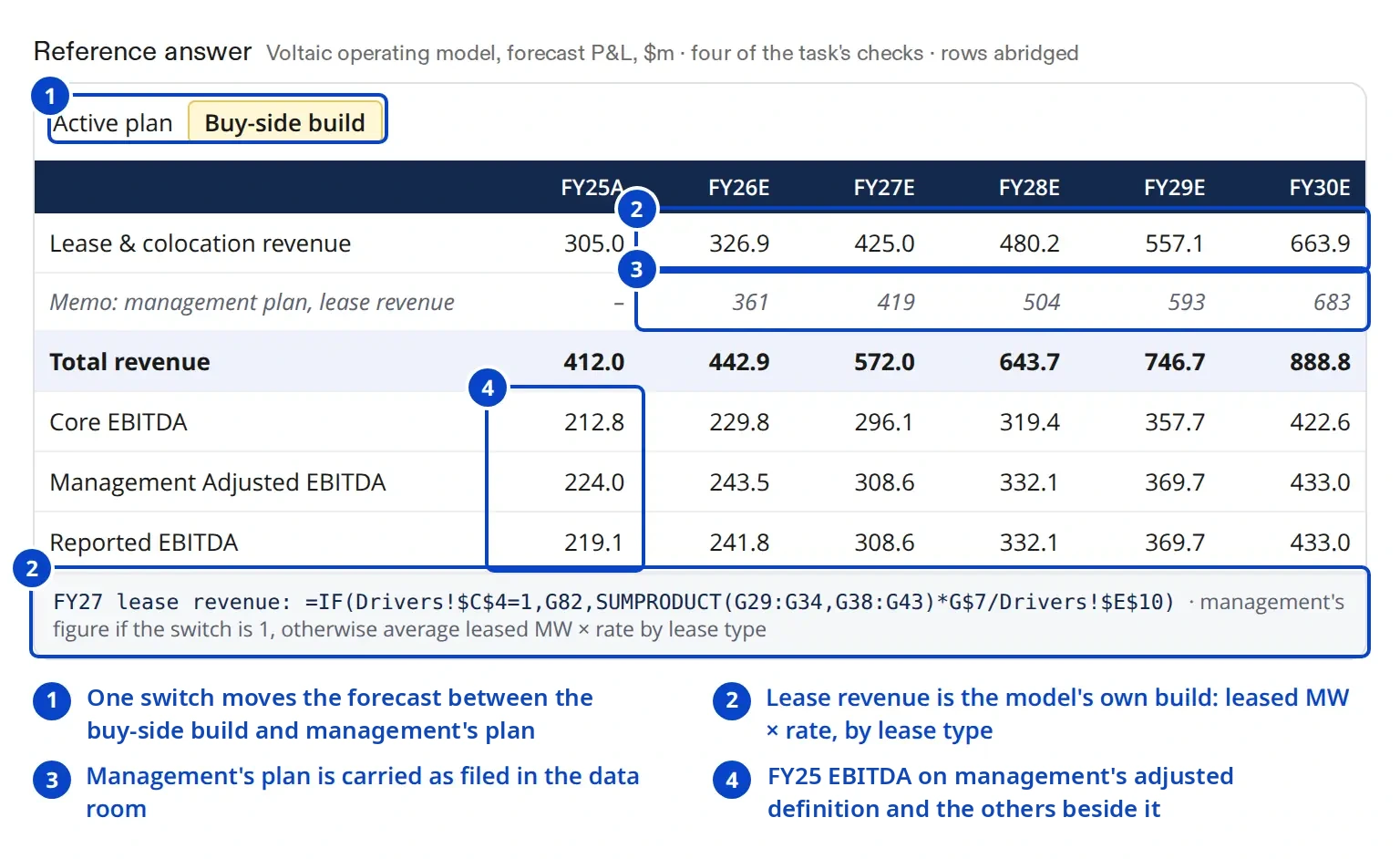
PE Bench is our own benchmark of the work a deal team hands a partner. Former private and growth equity investors built five deals: three private companies with full data rooms of PDF, Excel, Word and PowerPoint documents, and two take-privates of public companies built from their filings. Each task comes with only the short brief an analyst would get.
Every task has its own checks, dozens of them, mostly code that opens the delivered workbook, memo or deck. The checks cover the model’s mechanics, its ties to the data room and the analyst’s judgement, and any defensible convention the brief leaves open passes. For 50 of the 58 tasks, a reference answer scores 100% on its own checks.
PE Bench results
Compound scores 80.5% overall, Claude Code with Opus 5.5 78.1%, Claude Code with Fable 5.1 73.5% and Codex with GPT-6 Astra 70.1%.
- Compound
- Best other agent shown
- Claude Code
- Codex
- Gemini
- Muse
What the scores measure
In the Voltaic data room the seller adds back $4.8M of sale costs. Opus 5.5 and GPT-6 Astra accepted all of it. Compound rejected $2.9M spent before the board authorized a strategic review: about $60M of price at the deal’s 21.0x entry multiple.
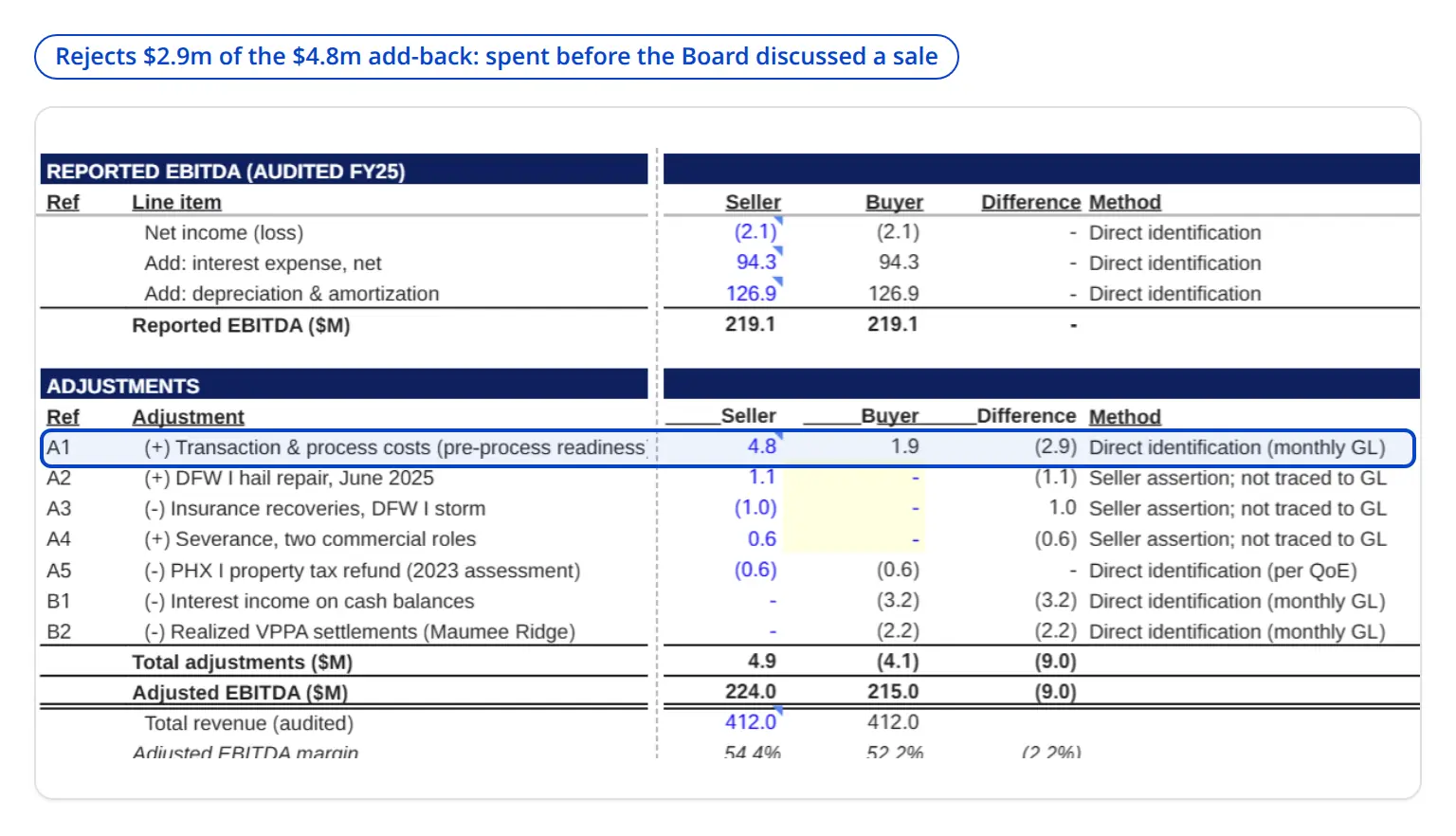
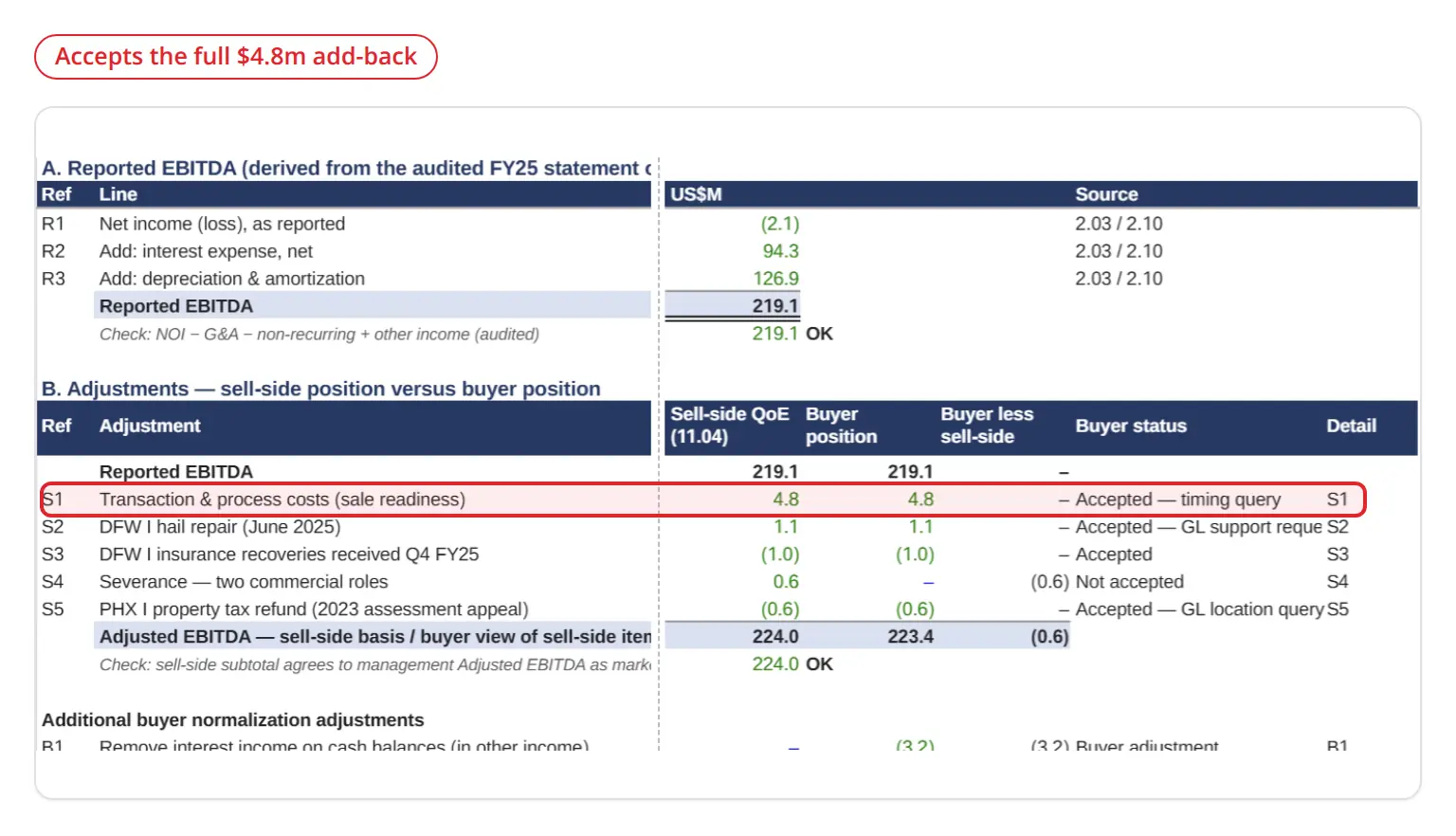
The PE Bench write-up shows each agent’s files side by side. The Voltaic data room is published for anyone to rerun.
Question answering over filings: FinanceBench, FinQA, TAT-QA
FinanceBench asks open-book questions about 10-K, 10-Q and 8-K filings; 150 of its 10,231 questions are public. FinQA, ConvFinQA and TAT-QA are academic datasets of numerical questions over report text and tables. They measure whether a model reads financial statements correctly, a precondition for analyst work rather than the work itself. Kensho retired its S&P AI Benchmarks leaderboard, built on the same kind of questions, in July 2025 after top models passed 90%.
Agentic research: Finance Agent, Big Finance Bench, FrontierFinance, FinSearchComp
These benchmarks give a model search tools and grade a written research answer. Finance Agent uses entry-level analyst questions on SEC filings with a jury of three AI judges. Big Finance Bench has 928 questions written by former finance practitioners, including private capital, graded on about 17 rubric items each. FrontierFinance grades long-form investment research against expert rubric items. FinSearchComp tests whether an agent finds the right financial data on the web. None of them grades a model or a deck.
Models and deliverables: Excel Modeling Benchmark, BankerToolBench, APEX-Agents, GAUGE, GDPval
These grade the files. The Excel Modeling Benchmark scores LBO, DCF and M&A workbooks against expert models. BankerToolBench gives agents data rooms and market data and has bankers’ rubrics grade the Excel, PowerPoint and Word files; none of the nine models produced work bankers would send as is. APEX-Agents covers investment banking analyst tasks across files and apps. GAUGE grades valuation workbooks against the range of what professionals build, and found that two analysts’ models for the same company match a median of only 0.33 under a single answer key. GDPval compares deliverables in 44 occupations with experts’ own work.
PE Bench is built on the private equity deal itself: the seller’s data room, the quality of earnings, the LBO, and the IC memo and deck.
FAQ
What is the best benchmark for private equity AI? PE Bench, our own benchmark, is built for it: it grades agents on private equity deal work from full data rooms, on the Excel, Word and PowerPoint files they deliver. Compound has the top overall score, 80.5%, as of October 2026.
What is FinanceBench? FinanceBench is a benchmark from Patronus AI of open-book questions about public-company filings, with short text or number answers. 150 of its 10,231 questions are public.
What is the Finance Agent benchmark? Finance Agent is a benchmark from Vals AI of analyst research questions on SEC filings. The model uses search tools and a jury of three AI judges grades its written answer against a rubric. Claude Fable 5.2 led it at 69.5% in November 2026.
Why do finance AI benchmarks disagree? Each tests different work and grades it differently: short answers, research write-ups or delivered files, against one answer key or a range of defensible practice. Leaders change with each release, so the benchmark that matters is the one closest to your own work.
Can we benchmark AI on our own deals? Yes. We build a private suite from your firm’s tasks, documents and standards with the method behind PE Bench, and score each model and agent on the files it delivers. See custom AI evals.