OpenAI breaks up its robotics team for the second time, betting GPT-6 Astra can run robots
OpenAI moved its robotics researchers under research chief Mark Chen and its robot hardware staff under president Greg Brockman, Fortune reported Nov. 13. It is the company's second robotics breakup since 2020. OpenAI says robotics work continues and a humanoid demo is still targeted for 2027.
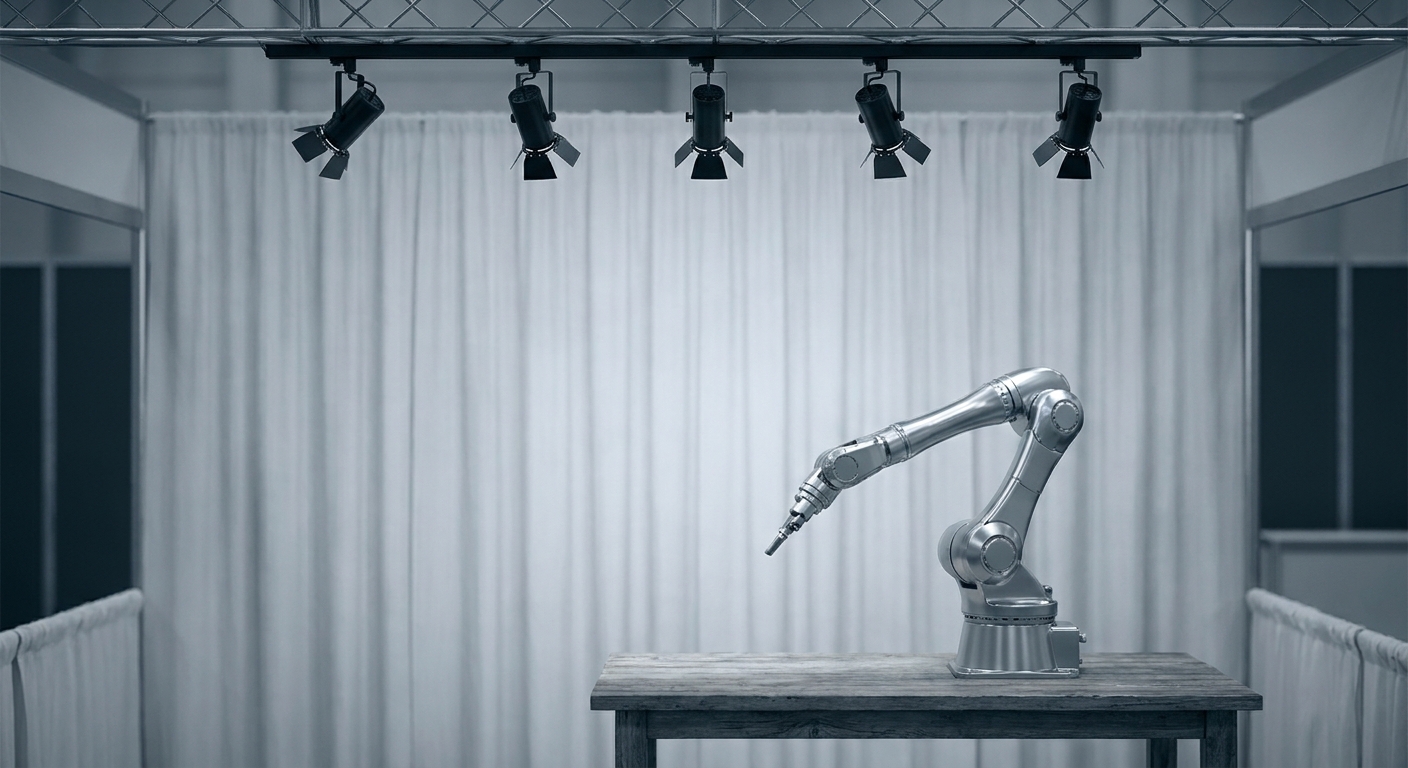
OpenAI has broken up its stand-alone robotics team, moving the researchers into its main research group under Chief Research Officer Mark Chen and the applied robotics and hardware staff into the Applied organization under President Greg Brockman, Fortune reported on Nov. 13 (Fortune). It is the second time OpenAI has dissolved a robotics team. The first was wound down in 2020.
OpenAI disputes the word "disbanded." The company told The Decoder it reorganized the team to work more closely with research and product and that robotics work continues (The Decoder). A spokesperson told Fortune that robotics remains core to OpenAI's long-term plans and that the company is still building its own humanoid robot, with CEO Sam Altman targeting a first public demo in 2027.
What changed on Nov. 13
The change came late enough that OpenAI had already registered booth #208 at the Conference on Robot Learning (CoRL) in Austin. When Fortune visited this week, the booth sat empty with no OpenAI logo, though the conference app still listed it (Fortune). CoRL ran Nov. 9 to 12, according to TechTimes.
OpenAI gave Fortune its reason. At the start of 2026, its researchers assumed the way forward in robotics was to build on Sora, its video model. Since then, the company said, general-purpose frontier models including GPT-6 Astra have proved directly usable for robotics, and that finding drove the reorganization (Fortune).
Business Insider reported in September that the robotics team was led by Aditya Ramesh, the researcher behind DALL-E who later worked on Sora (Business Insider). Neither Fortune's report nor OpenAI's statements say what role Ramesh holds after the change.
GPT-6 Astra robot benchmark results
The model OpenAI is betting on posted the top score in an Nvidia study. Nvidia researchers ran GPT-6 Astra on RoboLab-120, a simulated benchmark of 120 pick-and-place tasks on a DROID robot arm, five episodes per task. Running inside a Codex agent harness, Astra succeeded 74.8% of the time, 23.8 points above Lakeside, the best entry on the benchmark's leaderboard (Nvidia).
| Policy | Success rate on RoboLab-120 |
|---|---|
| GPT-6 Astra, agentic (Codex harness) | 74.8% |
| GPT-6 Astra, orchestrating Cosmos3-Nano-Policy | 66.5% |
| GPT-6 Astra, direct end-effector actions | 66.3% |
| Lakeside (prior leaderboard best) | 51.0% |
| Cosmos3-Nano-Policy | 36.8% |
| Physical Intelligence π0.5 | 28.0% |
Source: Nvidia Research, RoboLab-120 results. Simulation only, with the simulator paused while the model computed.
Speed and cost point the other way. Astra averaged 18.56 seconds per inference call (Nvidia). Physical Intelligence's π0.5 answered in 46.96 milliseconds, and Nvidia's cost figures run from about $1.96 per episode in direct mode to about $36.40 in agentic mode, TechTimes reported from Nvidia's data (TechTimes).
Results on real hardware are weaker. On Artificial Analysis's AA-Robotics test, run on a physical robot arm with human graders, Astra scored 69.4 at $16.36 and about 30 minutes per task, TechTimes reported (TechTimes).
OpenAI robotics timeline
| Date | Event | Source |
|---|---|---|
| Oct. 2019 | OpenAI shows a five-fingered robot hand that solves a Rubik's Cube | VentureBeat |
| Oct. 2020 | OpenAI stops robotics research; cofounder Wojciech Zaremba disclosed it in July 2021 and cited a lack of training data | VentureBeat |
| 2024 | OpenAI rebuilds a robotics team and partners with Figure on AI models for humanoids | Fortune |
| Nov. 2024 | Caitlin Kalinowski joins to lead hardware and robotics operations | Fortune |
| Feb. 4, 2025 | Figure exits its collaboration agreement with OpenAI | TechCrunch |
| Jan. 2026 | Business Insider reports a San Francisco lab with about 100 data collectors teleoperating robot arms | Business Insider |
| Mar. 7, 2026 | Kalinowski resigns, citing OpenAI's Pentagon agreement | Fortune |
| Mar. 2026 | OpenAI leases a 202,000-square-foot warehouse in Richmond, Calif. | San Francisco Chronicle |
| Sept. 3, 2026 | Altman says OpenAI will build a humanoid and data center robots | Humanoids Daily |
| Sept. 2026 | 27 robotics job listings, up from 11 in May, with base pay of $177,000 to $500,000 | Business Insider |
| Nov. 13, 2026 | Stand-alone robotics team split between Chen's research group and Brockman's Applied organization | Fortune |
In 2021, Zaremba said OpenAI would have kept going if it were a robotics company, but that for building artificial general intelligence "there were some components missing" (VentureBeat). This time OpenAI's stated reason is the reverse: its general models now do enough on their own.
What robotics researchers and companies said
Guanya Shi, an assistant professor at Carnegie Mellon University's Robotics Institute, told Fortune the move signals OpenAI sees robotics as "no longer a special problem." Shi still expects a need for smaller models that run on a robot's onboard computer without a constant network connection (Fortune).
Russ Tedrake, an MIT professor and CEO of Walden Robotics, told Fortune that robotics companies hold an edge the labs lack: robots already working on factory floors collect site-specific data, and better foundation models learn from that data faster (Fortune).
Figure CEO Brett Adcock made the opposite bet when Figure left OpenAI. "We found that to solve embodied AI at scale in the real world, you have to vertically integrate robot AI," he told TechCrunch in February 2025 (TechCrunch).
OpenAI's costs
OpenAI's operating losses totaled $10.9 billion in the most recent quarter, Fortune reported, citing other reports (unconfirmed). Fortune said the company is trying to close a new funding round and is preparing for a possible IPO in early 2027, and that Altman told staff last year to drop "side quests," a push that ended Sora (Fortune).
What to watch
- Early 2027: a possible OpenAI IPO, per Fortune. A filing would be the first audited look at what OpenAI spends on robotics and hardware.
- 2027: Altman's target for OpenAI's first public humanoid demo, now owned by Brockman's Applied organization rather than a dedicated robotics team.
- Jan. 20, 2027: the EU Machinery Regulation 2023/1230 takes effect, according to TechTimes, setting safety rules for machinery that includes AI-driven robots.
- The Richmond warehouse and the September job listings: whether OpenAI keeps hiring actuator and data-collection staff after the reorganization.
More from Compound News
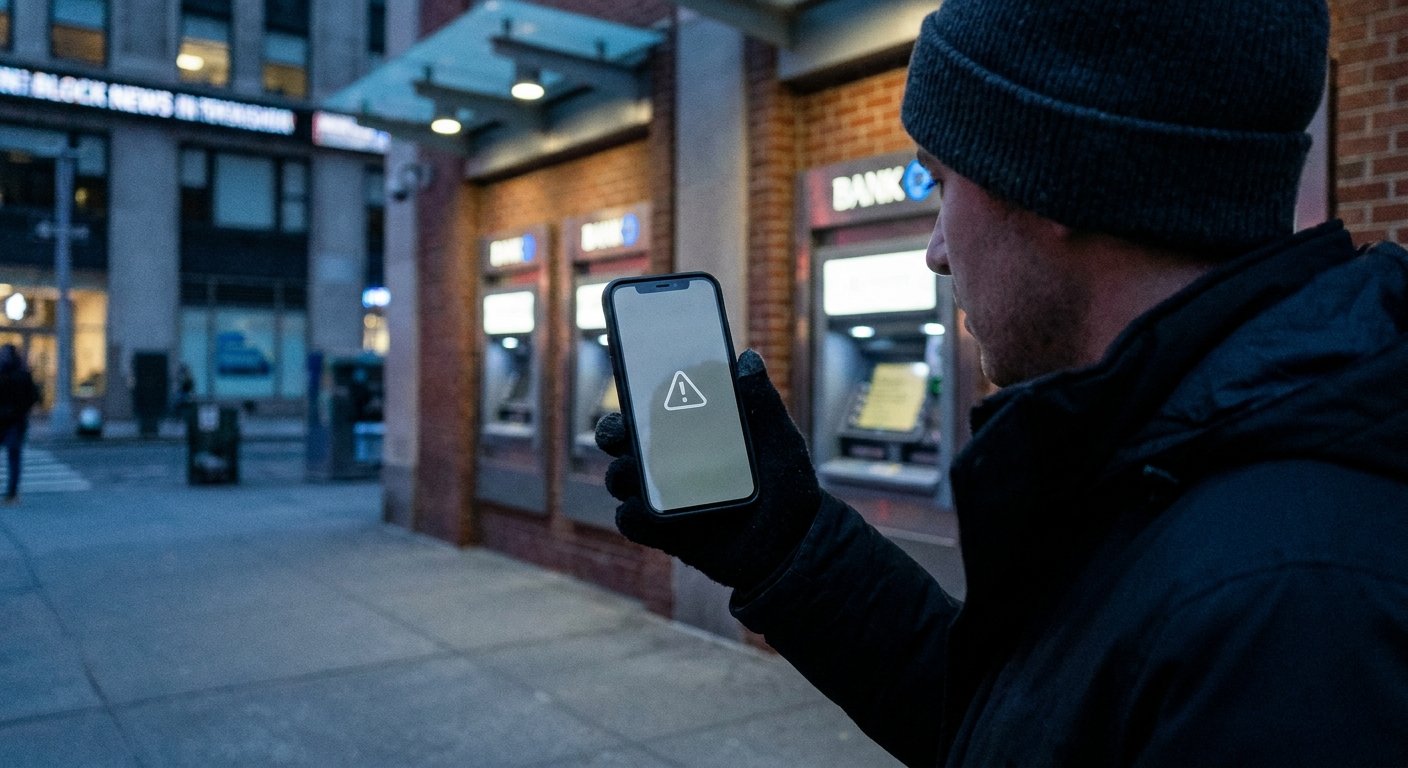
What's causing the Chase, Bank of America and Wells Fargo outages
Chase customers filed more than 4,600 Downdetector reports by 1:50 p.m. ET on Nov. 16 as Bank of America, Wells Fargo and U.S. Bank also saw spikes. Chase blamed a technical bug, not a cyberattack. Here is what is known about the cause, updated live.
Read article →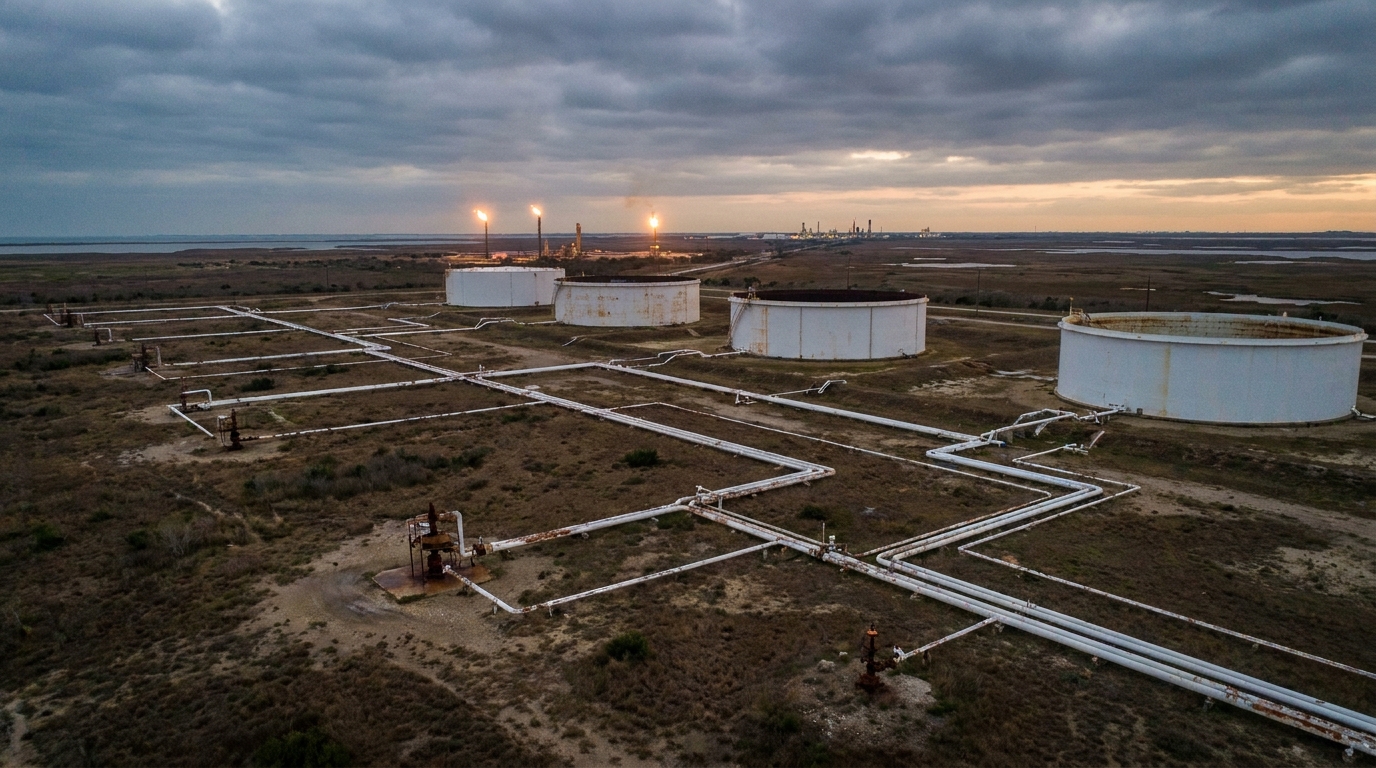
The US Oil Reserve Is at a 44-Year Low. How Much Can It Still Release?
The Strategic Petroleum Reserve held 276.4 million barrels last week, the lowest since 1982. Our model finds about 111 million barrels releasable at next year's trough, and a refill gap of about $17 billion.
Read article →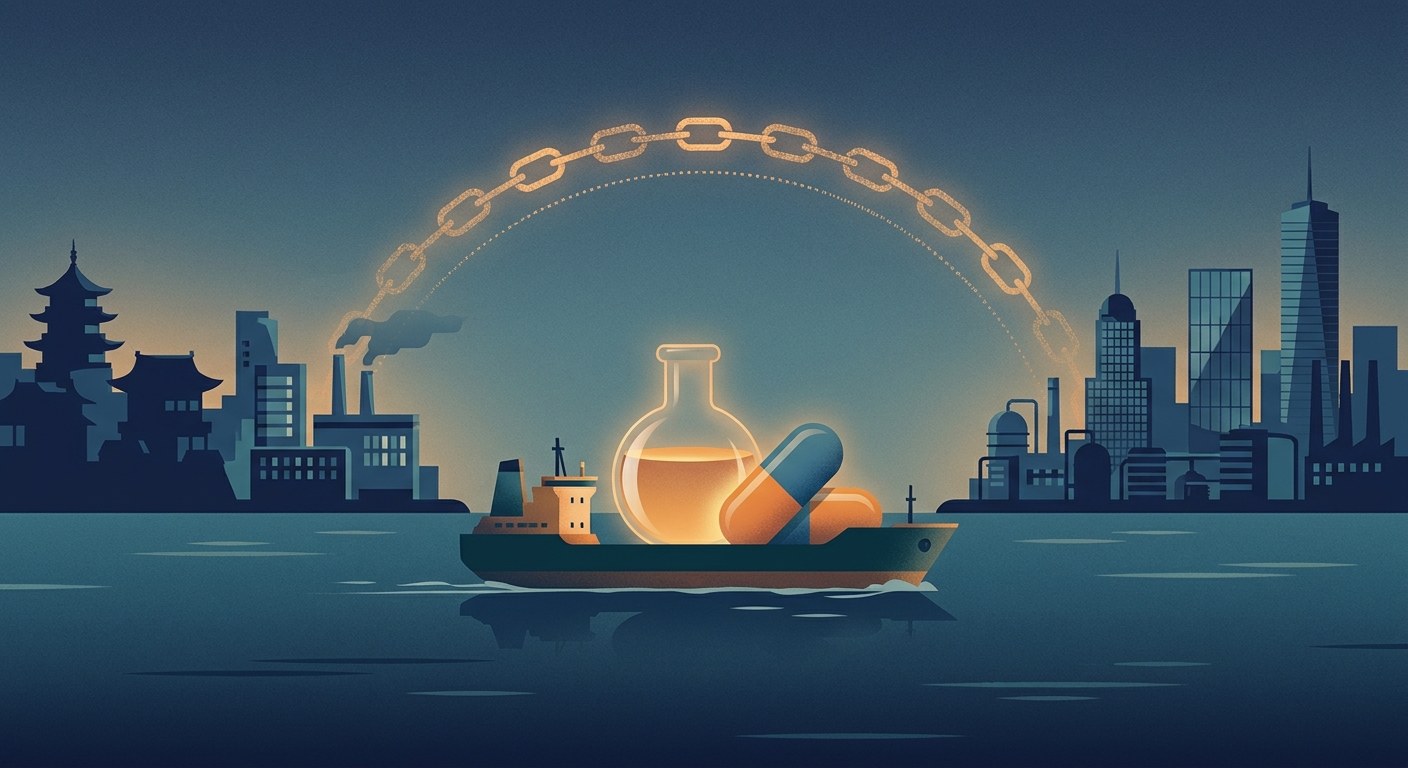
America's China Drug Habit: A $132 Billion Pipeline and a $6 Billion Peptide Boom
The FDA rejected a China-invented cancer drug on Sunday, just as Chinese molecules make up half of big pharma's major licensing deals. Our model puts peak sales of China-invented drugs at about $132 billion a year, and the US peptide market at about $6.3 billion.
Read article →