Nike IC memo: underwriting a minority stake at the trough
A 19-page investment committee memo on Nike, written for a partner from the filings and a returns model, with the deck and model to download
by Compound Team · October 29, 2026 · 7 min read
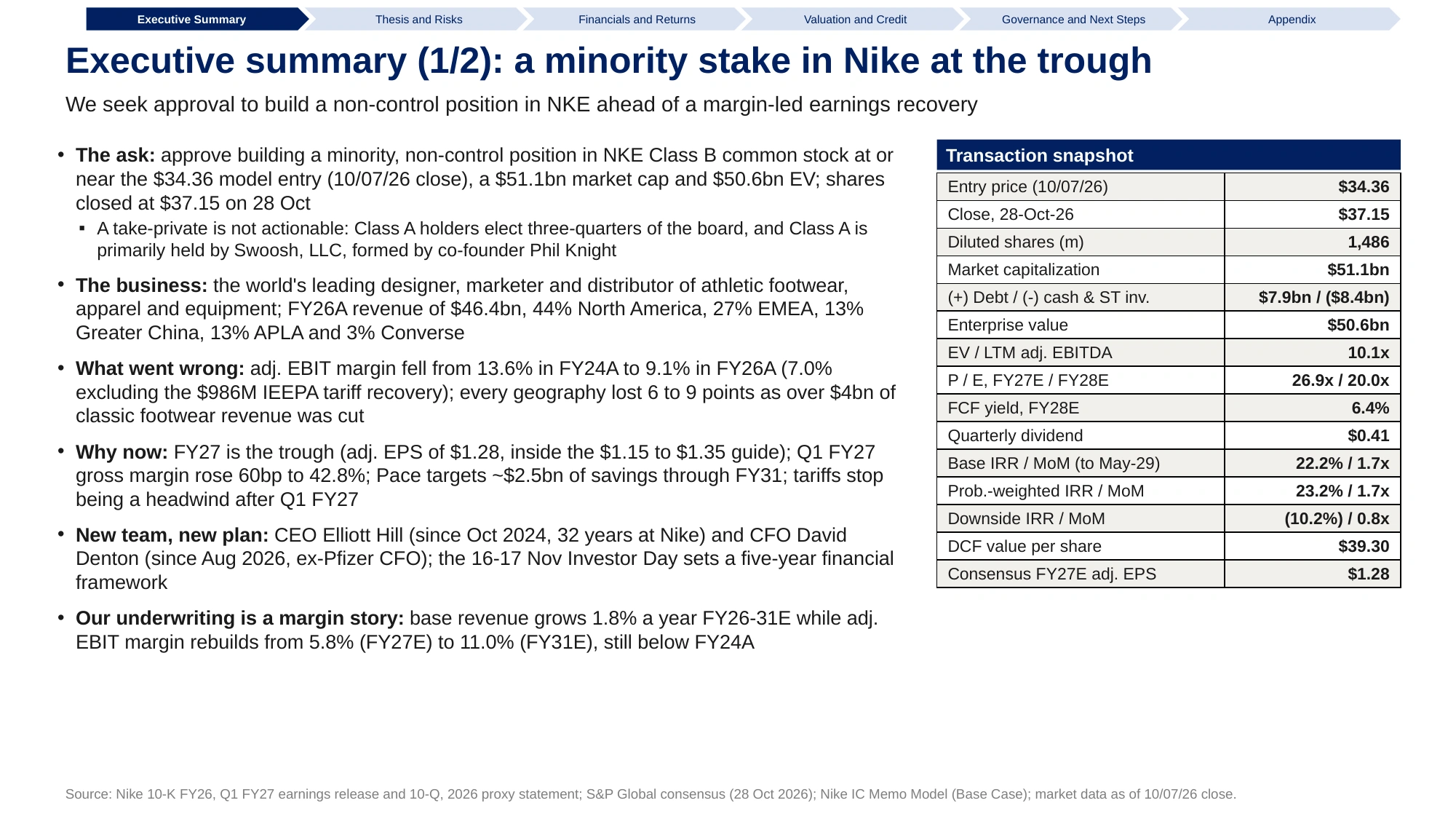
Nike’s shares fell 76.9% in the five years to early October 2026, and on 16–17 November management will set out a five-year financial framework at its first Investor Day since Elliott Hill became CEO. Ahead of it, we asked Compound to write the investment committee memo for a minority stake in Nike, the way a PE associate would brief a partner. Project Swoosh is the result: a 19-page IC deck built on a returns model and the public record, with both files below.
The case: why a minority stake, and why now
A take-private is not on the table. Class A holders elect three-quarters of Nike’s board, and Class A is mainly held by Swoosh, LLC, formed by co-founder Phil Knight. At a $51.1bn market cap, with A ratings and a 2.0x Moody’s leverage trigger, there is no room for an LBO capital structure either. The actionable position is a liquid, non-control stake, which is what the memo asks the committee to approve.
The timing argument is that FY27 is the trough. Adjusted EBIT margin fell from 13.6% in FY24 to 9.1% in FY26, and to 7.0% once the $986M IEEPA tariff recovery is taken out; every geography lost 6 to 9 points. FY27 adjusted EPS of $1.28 sits inside management’s $1.15 to $1.35 guide. The first signs of a turn are in the Q1 FY27 numbers: gross margin up 60bp to 42.8% on revenue down 4%.
How the memo was built
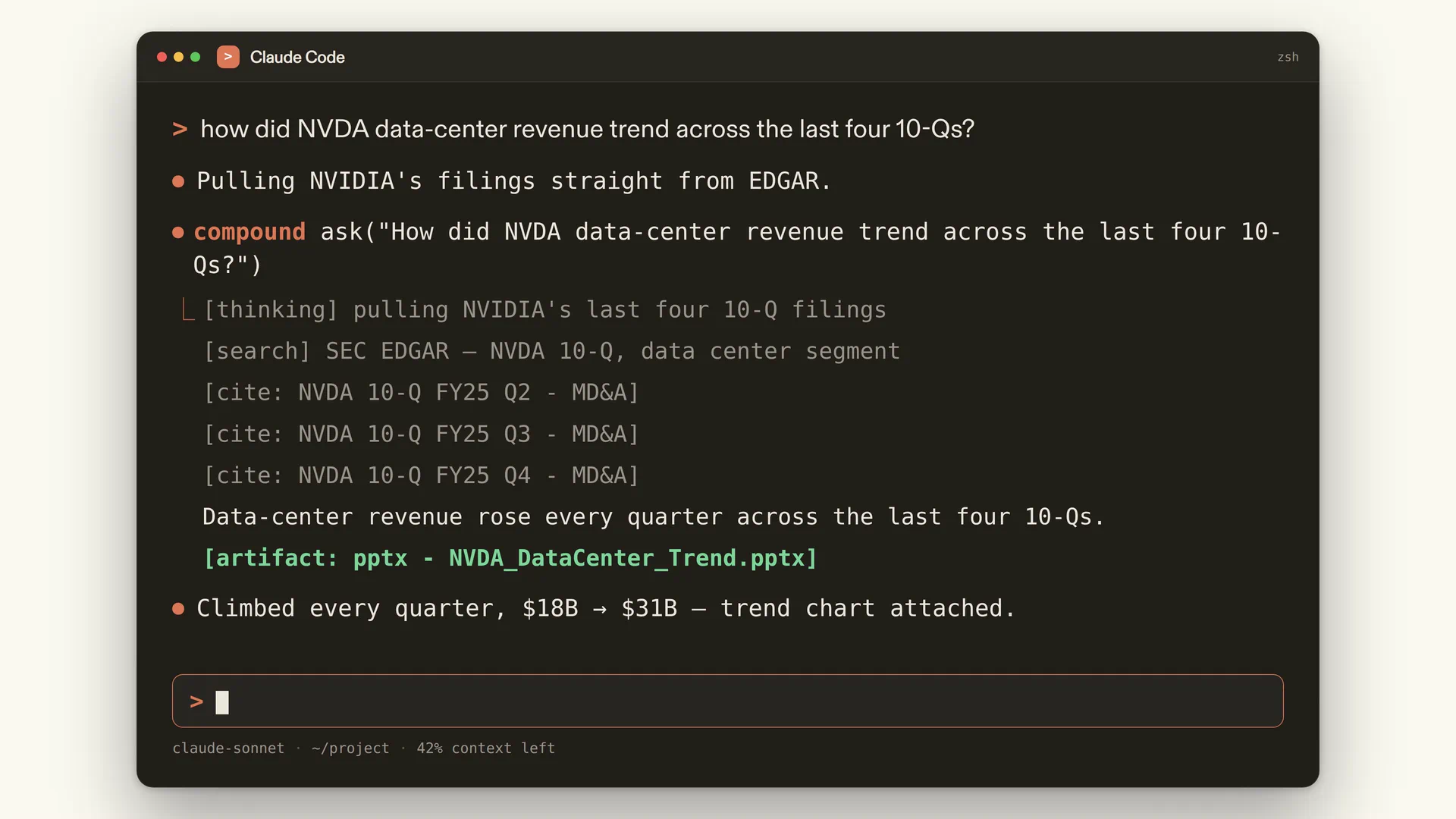
The work started from a data room of Nike’s public record, organized the way an analyst would file it: 10-Ks from FY22 to FY26, every 10-Q and earnings release since FY24, the official call transcripts, the 2025 and 2026 proxies and the leadership 8-Ks. On top of it sits a Nike model with an operating build by geography and channel, Base, Downside and Upside cases, returns from a $34.36 entry (the 7 October close) to May 2029, a DCF and trading comps.
The memo took one instruction:
Can you create an investment memo based on the Nike model and your diligence. Imagine you’re a PE associate explaining the deal to a partner.
What came back reads as a deal team’s memo rather than a company profile. It opens with the ask and a transaction snapshot, sources each figure to the 10-K, the Q1 FY27 10-Q, the proxy or a model tab, and ends with a sizing plan.
The view: a margin story, not a revenue story
The memo underwrites earnings growth from margin and a lower share count, not from the top line. In the Base case revenue grows only 1.8% a year from FY26 to FY31, while adjusted EBIT margin rebuilds from 5.8% in FY27E to 11.0% in FY31E, still below FY24. Adjusted EPS rises from $1.28 to $3.11, which is still under the $3.97 Nike earned in FY24.
For that to happen, three things have to be true:
- North America’s EBIT margin gets back to 27.0% by FY31E.
- Greater China’s margin rebuilds from 15.0% to 19.0%.
- Overhead falls from 27.4% to 23.7% of revenue as the savings from Pace, Nike’s cost program, come through.
Free cash flow covers the roughly $2.5bn annual dividend in every year from FY27E, and buybacks restart at $0.5bn in FY28E.
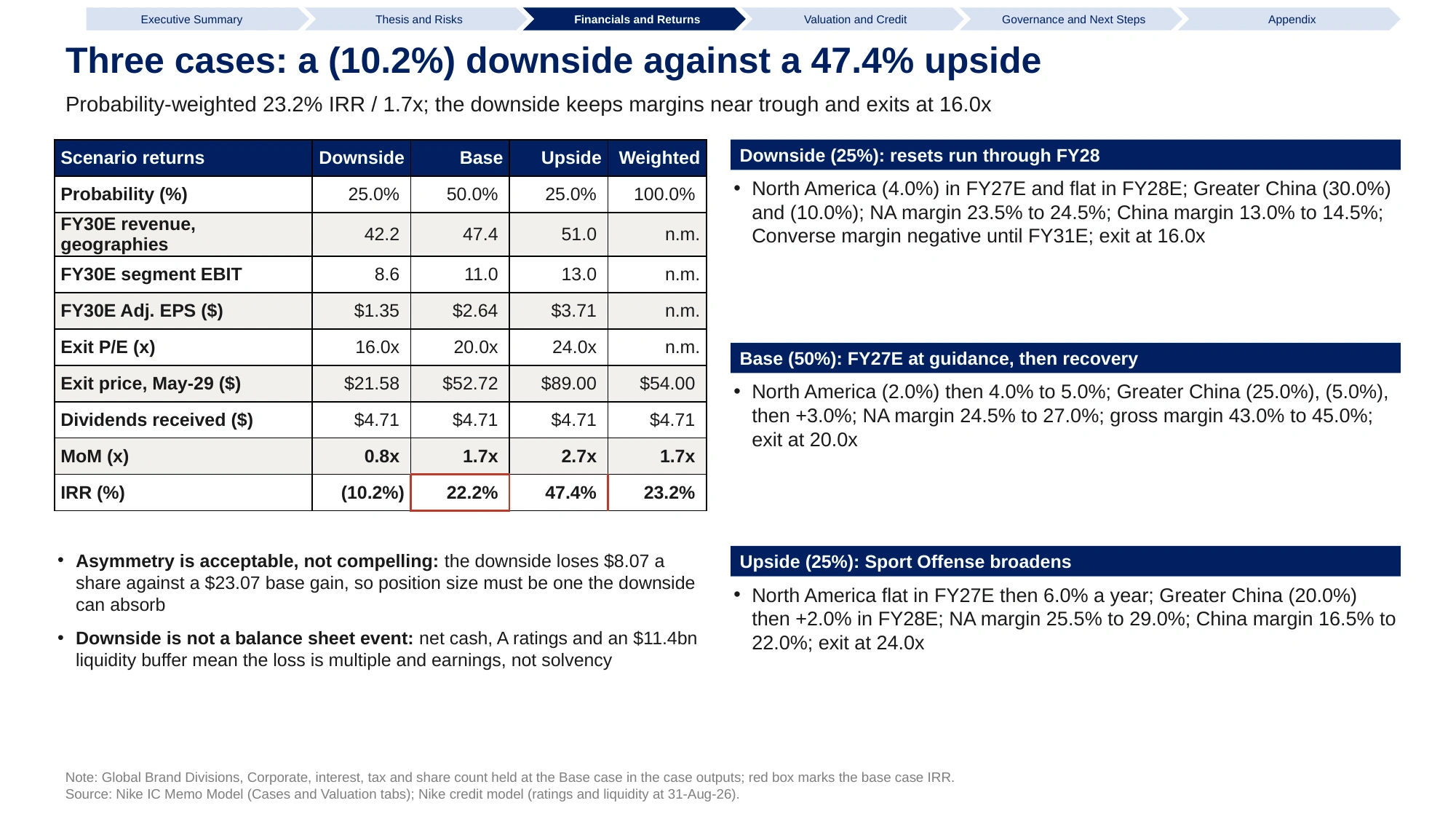
| Case | Probability | FY30E adj. EPS | Exit P/E | IRR to May 2029 | MoM |
|---|---|---|---|---|---|
| Downside | 25% | $1.35 | 16.0x | (10.2%) | 0.8x |
| Base | 50% | $2.64 | 20.0x | 22.2% | 1.7x |
| Upside | 25% | $3.71 | 24.0x | 47.4% | 2.7x |
| Probability-weighted | 23.2% | 1.7x |
Source: Project Swoosh IC memo; Nike IC Memo Model, Cases and Valuation tabs. Entry at $34.36, the 7 October 2026 close; IRR includes dividends.
Where the case is weakest
The memo is clear about what a partner should push on.
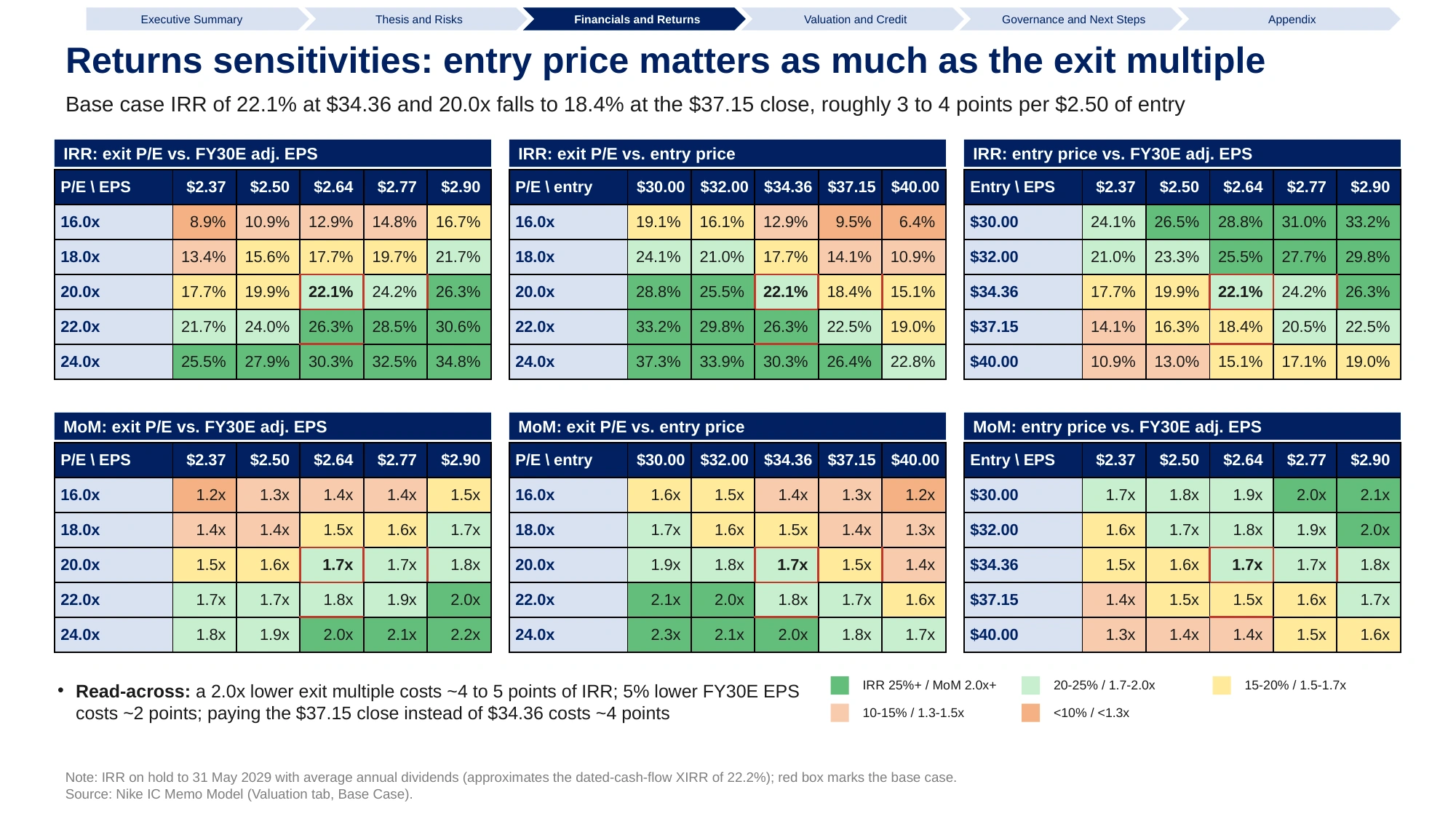
- Entry price. Returns clear 20% only near the model entry. At the $37.15 close of 28 October the Base case falls to 18.4% and 1.5x; each $2.50 on the entry costs roughly 3 to 4 points of IRR.
- The exit multiple. The Base case exits at 20.0x FY30E EPS, against 15.0x LTM P/E today. Two turns lower costs 4 to 5 points of IRR, and a 16.0x exit from the model entry returns 12.9%.
- The starting margin. FY26’s 9.1% includes the one-off tariff recovery; the clean base is 7.0%.
- Ratings. Moody’s moved Nike’s A2 rating to a negative outlook on 15 October, and S&P cut Nike to A from A+ on 5 October. Lease-adjusted leverage of 2.2x already sits above Moody’s 2.0x trigger, which is why buybacks wait.
Valuation against peers
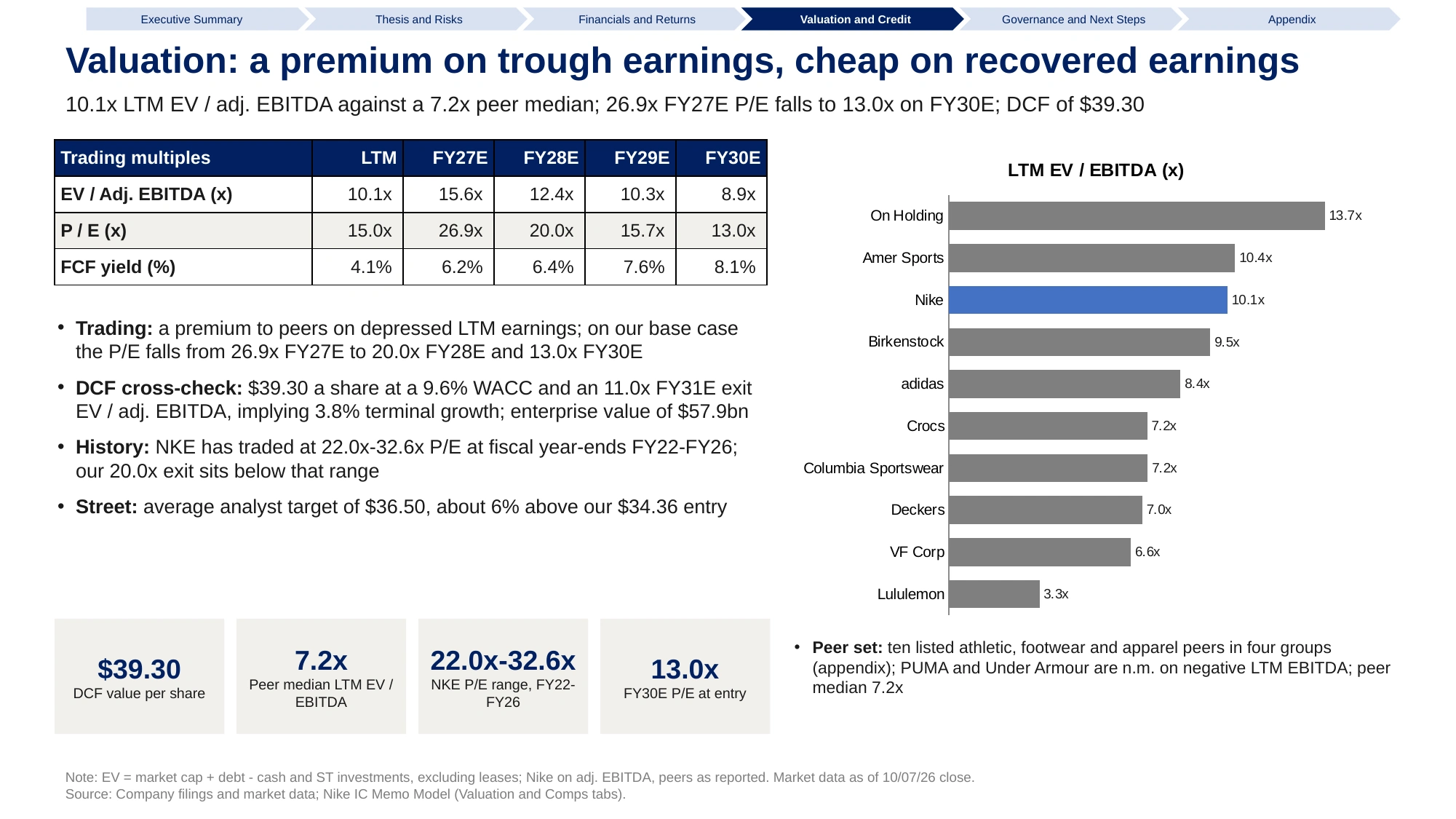
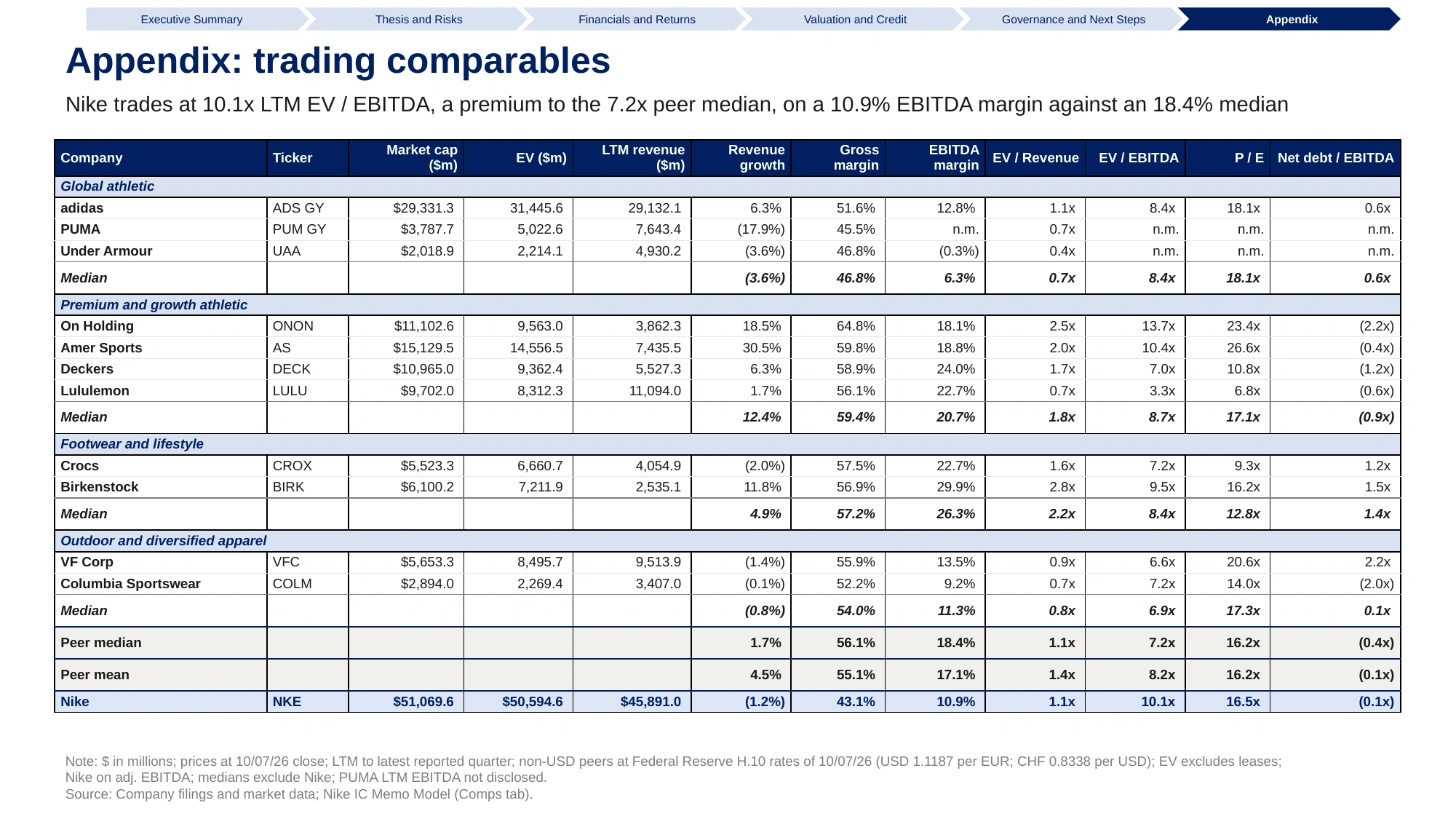
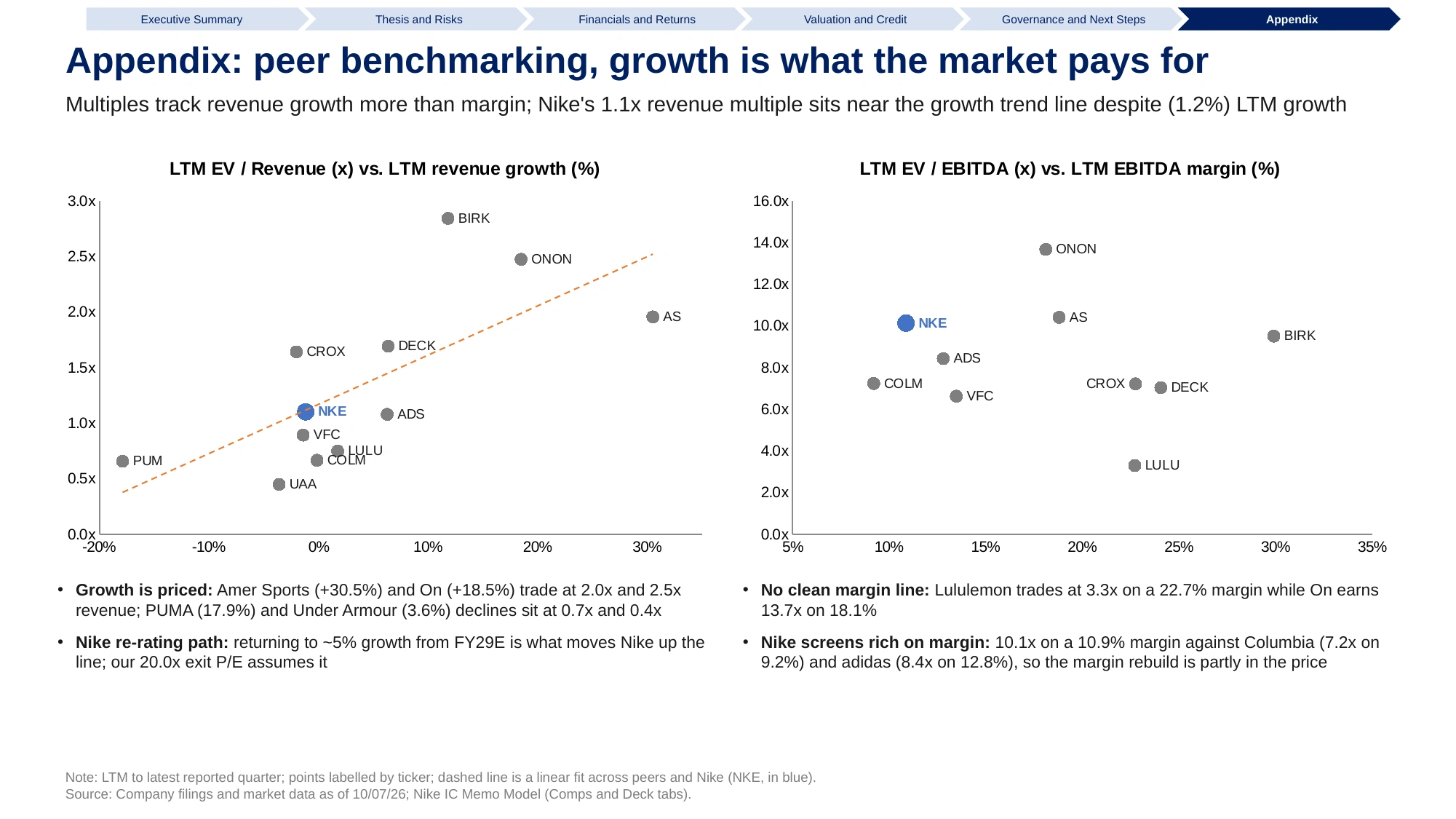
On trough earnings Nike is not cheap: 10.1x LTM EV to adjusted EBITDA against a 7.2x median for ten listed peers, and 26.9x FY27E earnings. On recovered earnings the multiple falls to 13.0x FY30E, and a DCF at a 9.6% WACC gives $39.30 a share. The peer work explains the premium. Multiples track revenue growth more than margin, and Nike’s 10.1x on a 10.9% EBITDA margin screens rich against Columbia at 7.2x and adidas at 8.4x, so part of the margin rebuild is already in the price.
What would change the view
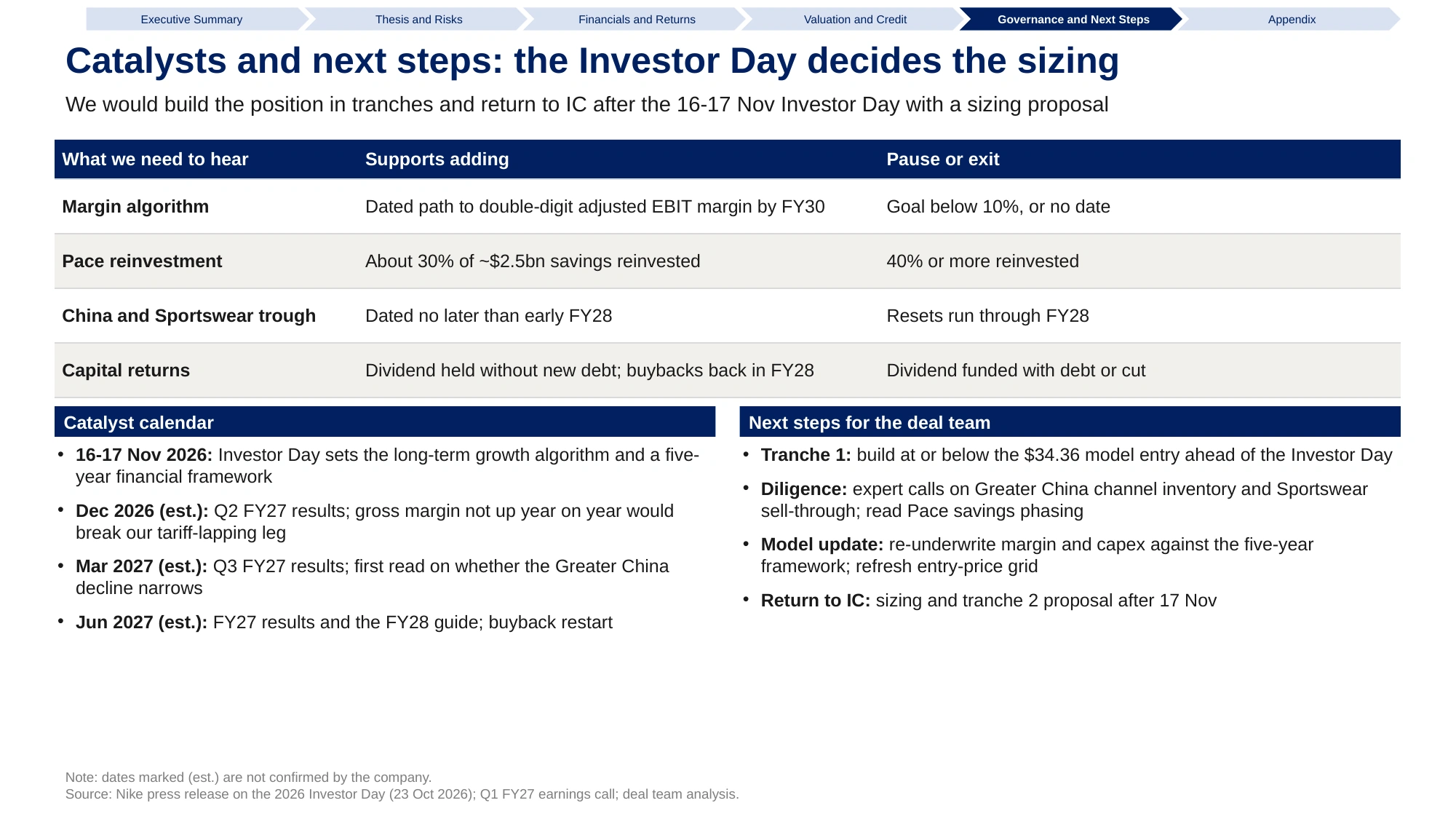
The recommendation is to build the position in tranches at or below the $34.36 model entry and come back to the committee after the Investor Day with a sizing proposal. Above about $37 the memo waits. The Investor Day either supports adding or pauses it, on four tests:
| What we need to hear | Supports adding | Pause or exit |
|---|---|---|
| Margin algorithm | Dated path to a double-digit adjusted EBIT margin by FY30 | Goal below 10%, or no date |
| Pace reinvestment | About 30% of the ~$2.5bn savings reinvested | 40% or more reinvested |
| China and Sportswear trough | Dated no later than early FY28 | Resets run through FY28 |
| Capital returns | Dividend held without new debt; buybacks back in FY28 | Dividend funded with debt or cut |
Source: Project Swoosh IC memo, catalysts and next steps page.
After that, Q2 FY27 results in December are the first hard test: if gross margin does not rise year on year, the tariff-lapping leg of the Base case is wrong.
Download the memo and the model
Nike IC memo deck (PowerPoint): Project SwooshThe 19-page investment committee memo: executive summary and recommendation, thesis and risks, base case and three cases with returns sensitivities, valuation and credit, governance, the Investor Day checklist and the trading comparables, with editable charts and tables.Download · Free Nike IC memo model (Excel): cases, returns, DCF and compsThe model behind every figure in the memo: Base, Upside and Downside drivers with a case selector, the segment build and three statements from FY24A to FY31E, returns from the $34.36 entry with IRR and MoM grids, the DCF, the trading comparables, and the tables and charts the deck uses, formulas intact.Download · FreeFor a Word memo template and a worked example on a private-company buyout, see our investment memo example.